Unseen Threads: The Powerful Impact of Unspoken Family Rules
Family
Have you ever felt an invisible current guiding your actions within your family, even though no one ever explicitly told you what to do? This phenomenon, deeply embedded in the fabric of every household, is precisely what we explore in our latest deep dive: "Unspoken Family Rules." These are the phantom guidelines, the silent decrees, the implicit understandings that dictate everything from how you express emotions, to who gets a say in major decisions, to what topics are strictly off-limits at the dinner table. They're not written down in any family constitution, nor are they announced during a formal family meeting. Instead, they manifest as subtle cues, learned behaviors, and a profound sense of "just knowing" how things are done. They are the invisible glue, or sometimes the invisible barrier, that shapes interactions and relationships, often without anyone consciously realizing their pervasive influence. Our comprehensive post peels back the layers of these often-invisible mandates, revealing how they are formed, perpetuated across generations, and the powerful impact they have on individual development and overall family dynamics. We delve into the complex origins of these rules, examining how historical patterns, cultural backgrounds, societal expectations, and past family experiences — both positive and challenging — shape the silent contracts we unwittingly sign onto from childhood. You'll learn to identify common types of unspoken rules, ranging from the seemingly benign and supportive, like "we always help each other out," to the potentially detrimental and restrictive ones, such as "never show weakness," "don't talk about difficult subjects," or "always maintain a perfect facade." Understanding these hidden directives is the first crucial step towards fostering healthier communication, breaking cyclical patterns that no longer serve you or your family, and cultivating an environment of genuine connection and psychological safety. This exploration doesn't just identify the problem; it also offers practical insights and actionable strategies into how to acknowledge, understand, and ultimately navigate these unwritten laws. We discuss methods for recognizing when an unspoken rule is causing tension, hindering personal growth, or creating unhealthy dynamics within your family system. Furthermore, we provide guidance on respectfully challenging, re-negotiating, or even consciously discarding these implicit agreements to forge more authentic and fulfilling relationships. Whether you're seeking to understand your own family better, improve strained relationships, empower yourself to break free from inherited constraints, or simply gain a deeper appreciation for the intricate, often unseen, dance of family life, this post promises to illuminate the hidden forces at play. Join us as we shine a bright light on the invisible architecture of family life, empowering you to consciously shape your own narrative and build more authentic, resilient connections for yourself and future generations.
The Invisible Architecture: Uncovering Family's Unwritten Laws
Deep within the intricate tapestry of every family lies a hidden structure, an "invisible architecture" comprised of unwritten laws that profoundly shape our thoughts, feelings, and actions long before we ever consciously articulate them. These aren't explicit commands or formally agreed-upon principles; rather, they are the silent decrees, the phantom guidelines, and the implicit understandings that dictate the very rhythm of family life. From how emotions are expressed and processed to who holds power in major decisions, and even which sensitive subjects are deemed strictly off-limits at the dinner table, these pervasive rules operate beneath the surface, manifesting as subtle cues, deeply ingrained behaviors, and an intuitive "just knowing" of how things are done within the household. They are the generational threads woven into our consciousness, often perpetuating patterns born from historical contexts, cultural norms, societal pressures, and the unique positive or challenging experiences of our ancestors. While some of these unspoken rules can act as a supportive framework, fostering connection, resilience, and mutual aid, others can become invisible barriers, stifling individual expression, creating tension, and hindering genuine psychological safety or personal growth. Uncovering this complex network of unwritten mandates is not merely an intellectual exercise; it is the crucial first step toward recognizing their powerful influence, understanding their origins, and ultimately, gaining the agency to respectfully challenge, renegotiate, or even consciously discard those implicit agreements that no longer serve to create an environment of authentic communication, deeper connection, and resilient, healthy relationships for ourselves and future generations. It’s about shining a light on these unseen forces to consciously build a narrative that truly reflects our highest potential and fosters genuine well-being.
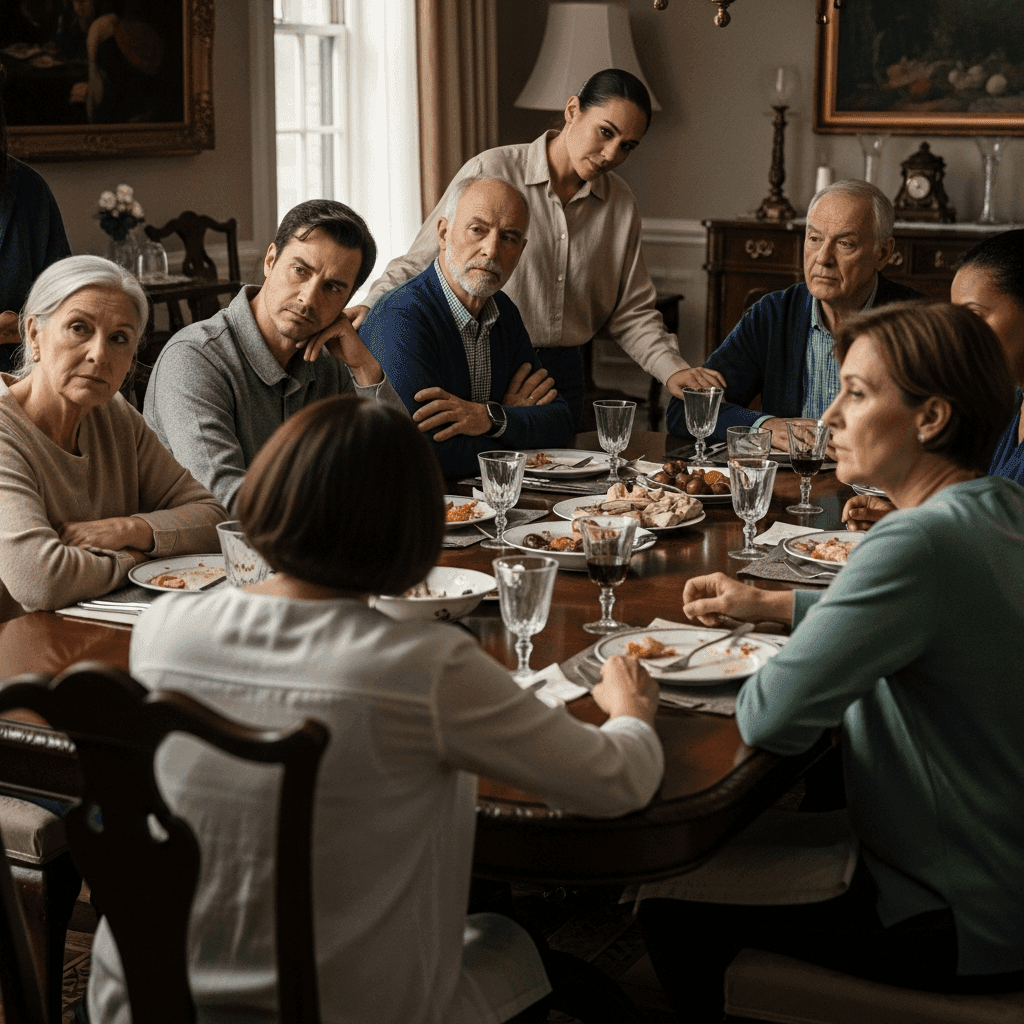
Navigating the Unseen Architecture: Unspoken Rules in Family Life
Every family operates within an intricate, often unseen framework of "unspoken rules"—phantom guidelines that profoundly shape interactions, behaviors, and relationships, even though they are never explicitly articulated. These implicit understandings act like an invisible current, dictating everything from how emotions are expressed and decisions are made, to which topics are deemed off-limits at the dinner table. Far from being formal decrees, these rules manifest as subtle cues, learned behaviors, and a deep-seated sense of "just knowing" how things are done within the household. They are the silent contracts we unwittingly sign onto from childhood, an invisible architecture built from historical patterns, cultural backgrounds, societal expectations, and past family experiences. From seemingly benign directives like "we always help each other out" to potentially restrictive ones such as "never show weakness" or "don't talk about difficult subjects," these ingrained mandates exert a powerful influence on individual development and overall family dynamics. Recognizing this pervasive, unwritten code is the critical first step toward fostering healthier communication, breaking cyclical patterns that no longer serve you, and cultivating an environment of genuine connection and psychological safety within your family system. Our comprehensive exploration aims to illuminate this hidden architecture, offering practical insights and actionable strategies to acknowledge, understand, and ultimately navigate these unwritten laws, empowering you to respectfully challenge, re-negotiate, or even consciously discard implicit agreements to forge more authentic and fulfilling relationships and shape your own narrative for future generations.

Discussion
No comments yet
Be the first to share your opinion!

Jennifer Trimbee

Aug 19, 2025

0 reading now
What Causes Cysts and When to Worry
Cysts are fluid-filled sacs that can develop in various parts of the body, including the skin, ovaries, and internal organs. They are usually benign, meaning they are not cancerous, and are often caused by blockages in ducts, cell proliferation, or infections. Hormonal changes, genetic factors, and chronic inflammatory conditions can also contribute to cyst formation. While most cysts are harmless and may resolve on their own, some can become problematic if they grow large, cause pain, or become infected. It's important to monitor cysts and seek medical advice if they change in size, color, or sensation, or if they occur in conjunction with other symptoms.
Read more
Jennifer Trimbee
Aug 19, 2025

Disclaimer
This site offers information designed for educational purposes only. You should not rely on any information on this site as a substitute for professional medical advice, diagnosis, treatment, or as a substitute for, professional counseling care, advice, diagnosis, or treatment. If you have any concerns or questions about your health, you should always consult with a physician or other healthcare professional.