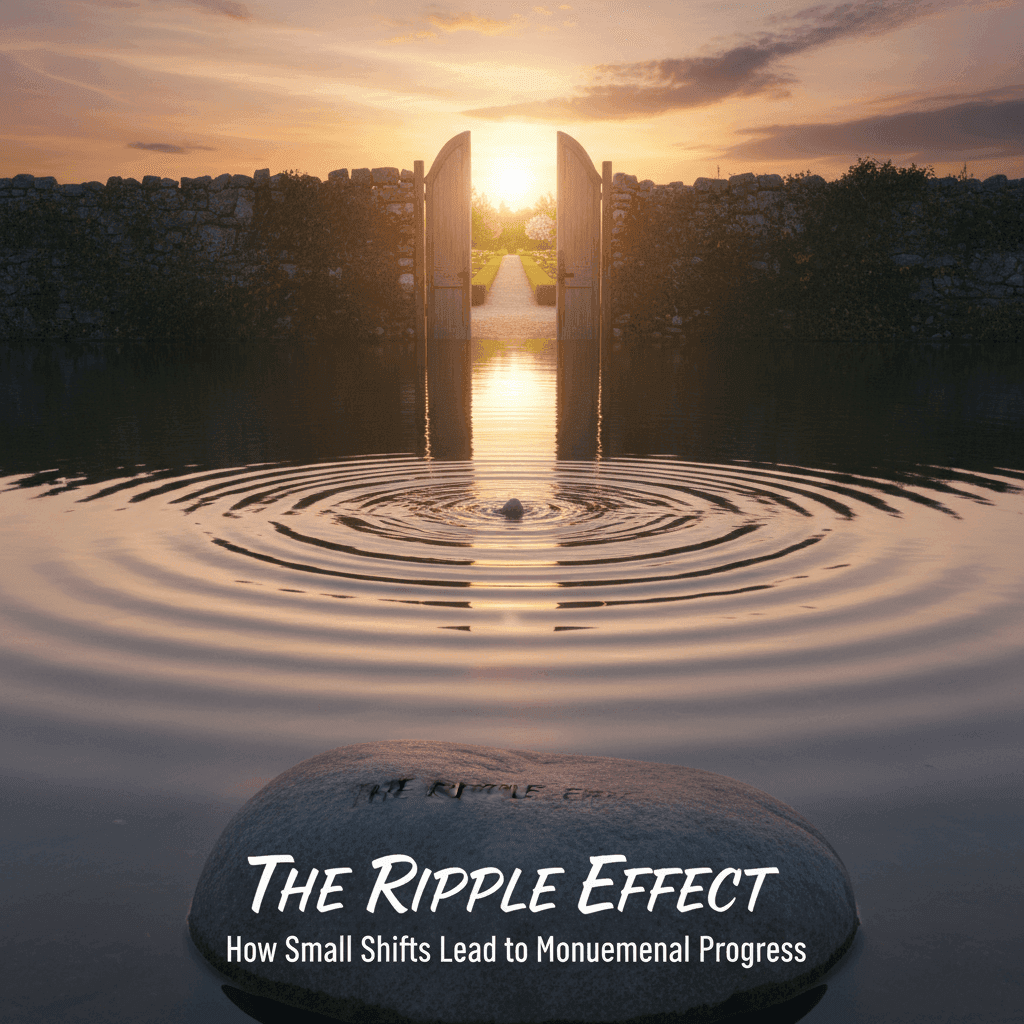
The Ripple Effect: How Small Shifts Lead to Monumental Progress
Lifestyle and Welness
Dive into the transformative philosophy explored in 'The Power of Small Shifts,' a compelling examination of how seemingly insignificant daily adjustments can unfurl into monumental life changes. This insightful post meticulously unpacks the often-underestimated concept that lasting success, profound personal growth, and significant achievements are rarely the result of singular, drastic overhauls. Instead, they blossom from a consistent commitment to minor, incremental improvements. We delve deep into the psychological underpinnings that make small shifts so remarkably effective, exploring the compound effect in action across various facets of life—from career progression and financial stability to physical well-being and emotional resilience. Discover how cultivating micro-habits, making tiny tweaks to your routine, or embracing subtle shifts in perspective can mitigate overwhelm, conquer procrastination, and build unstoppable momentum. This isn't about revolutionary leaps; it's about the sustainable, gentle art of continuous refinement. We'll provide actionable strategies and real-world examples demonstrating how these 'tiny hinges' can truly 'swing big doors.' Learn to identify those pivotal, yet often overlooked, areas where a minimal effort can yield maximum impact. Understand why an extra five minutes dedicated to mindful breathing, a slight modification in your morning ritual, or a conscious choice to reframe a challenge can become the cornerstone of a healthier, happier, and more productive existence. If you've ever felt stuck, overwhelmed by ambitious goals, or simply yearned for a path to consistent improvement that doesn't demand monumental willpower every single day, then this post offers a refreshing and empowering perspective. Embrace the subtle art of evolution and unlock your potential, one deliberate, small shift at a time. Prepare to rethink your approach to goal-setting and discover the profound strength hidden within the unassuming power of the small.
Why Tiny Hinges Swing Big Doors: The Power of Incrementalism
The profound truth that 'tiny hinges swing big doors' encapsulates the very essence of incrementalism, a philosophy often underestimated in a world prone to seeking immediate, drastic transformations. Rather than demanding monumental overhauls that frequently lead to burnout and abandonment, the power of small shifts lies in its sustainable, gentle approach to continuous refinement. This isn't about revolutionary leaps; it's about recognizing the immense, cumulative force of consistent, minor adjustments. Each subtle tweak to your daily routine, every conscious choice to reframe a challenge, and every micro-habit cultivated, no matter how seemingly insignificant, contributes to an unstoppable momentum. Psychologically, this method mitigates the overwhelming feeling often associated with ambitious goals, making progress feel achievable and maintaining motivation over the long haul. Consider an extra five minutes dedicated to mindful breathing, a slight modification in your morning ritual, or a conscious effort to learn one new word daily; individually, these actions might appear trivial, but collectively, over weeks, months, and years, they unfurl into significant improvements in well-being, productivity, and personal growth. This compound effect is the secret engine, transforming minor efforts into major victories across career progression, financial stability, physical health, and emotional resilience. By focusing on these pivotal, often overlooked areas where minimal effort yields maximum impact, we circumvent the paralysis of perfectionism and build a robust foundation for lasting success, demonstrating that true evolution is an art of consistent, deliberate, small shifts rather than infrequent, exhausting sprints. This perspective empowers individuals to conquer procrastination, embrace gentle evolution, and unlock their full potential, one manageable, impactful adjustment at a time, ultimately proving that profound strength is indeed hidden within the unassuming power of the small.
Why Tiny Daily Adjustments Lead to Monumental Life Changes
Why do seemingly insignificant daily adjustments so reliably unfurl into monumental life changes? The answer lies in a powerful combination of psychological principles and the undeniable force of the compound effect, transforming what appears to be minor effort into truly profound outcomes over time. Our brains are hardwired to resist dramatic overhauls, perceiving them as threats to our established routines and comfort zones, which often leads to burnout and failure. Small shifts, however, circumvent this resistance by appearing non-threatening and manageable, making them far easier to initiate and, crucially, to sustain. When you consistently apply these micro-habits—whether it's an extra five minutes of focused work, a subtle reframe of a challenging situation, or a minor tweak to your morning ritual—each individual action, while small, deposits a tiny dividend into your personal growth account. These dividends don't just add up; they multiply. This continuous, gentle refinement builds unstoppable momentum, steadily chipping away at procrastination and mitigating overwhelm, thereby creating a sustainable path to progress that doesn't rely on monumental willpower every single day. The consistent, deliberate embrace of these tiny hinges ensures that bigger doors, previously thought immovable, eventually swing wide open, fostering a healthier, happier, and more productive existence rooted in an evolutionary rather than revolutionary approach.

Discussion
No comments yet
Be the first to share your opinion!

Jennifer Trimbee

Aug 19, 2025

0 reading now
What Causes Cysts and When to Worry
Cysts are fluid-filled sacs that can develop in various parts of the body, including the skin, ovaries, and internal organs. They are usually benign, meaning they are not cancerous, and are often caused by blockages in ducts, cell proliferation, or infections. Hormonal changes, genetic factors, and chronic inflammatory conditions can also contribute to cyst formation. While most cysts are harmless and may resolve on their own, some can become problematic if they grow large, cause pain, or become infected. It's important to monitor cysts and seek medical advice if they change in size, color, or sensation, or if they occur in conjunction with other symptoms.
Read more
Jennifer Trimbee
Aug 19, 2025

Disclaimer
This site offers information designed for educational purposes only. You should not rely on any information on this site as a substitute for professional medical advice, diagnosis, treatment, or as a substitute for, professional counseling care, advice, diagnosis, or treatment. If you have any concerns or questions about your health, you should always consult with a physician or other healthcare professional.